- Pascal's Chatbot Q&As
- Archive
- Page 14
Archive

NATO's Mark Rutte's current framing fails because it treats US support as an unquestioned constant, when the defining feature of the moment is that US commitment is itself the variable.
If you read closely, much of the argument rests on shaky assumptions, rhetorical shortcuts, and category errors about what “defend itself” even means in 2026.


Gemini's Analysis: The Panopticon of Code: A Technical and Sociopolitical Analysis of AI-Driven Censorship, Surveillance, and Regime Survival.
We are witnessing the emergence of “digital authoritarianism”—a model of governance where control is automated, invisible, and seamlessly integrated into the technological fabric of daily life.

ChatGPT analyses AI-enabled mass censorship and “invisible” manipulation at scale (2021–2026). Modern censorship isn’t just “remove the post”; it’s an end-to-end control stack...
...sense (collect + recognize), score (classify + predict), shape (rank + route + throttle), and sanitize (narrative substitution and demobilization)—through state security and platform governance.

Ted Entertainment v. Snap: YouTube is designed to let the public stream videos, not obtain the underlying files, and Snap allegedly engineered a pipeline to defeat that architecture at scale...
...for commercial AI training. It becomes a case about breaking an access-control system—and doing so millions of times.

An administration behaving like “rabid dogs”—officials who have shed the normative brakes of ideology, religion, or psychology, driven instead by a pathological hatred of adversaries...
...and a rejection of all ethical barriers. The “wishful thinking” that paralyzes the public, the “rational actor fallacy” that blinds the political class, and the “normalcy bias” that sedates media.
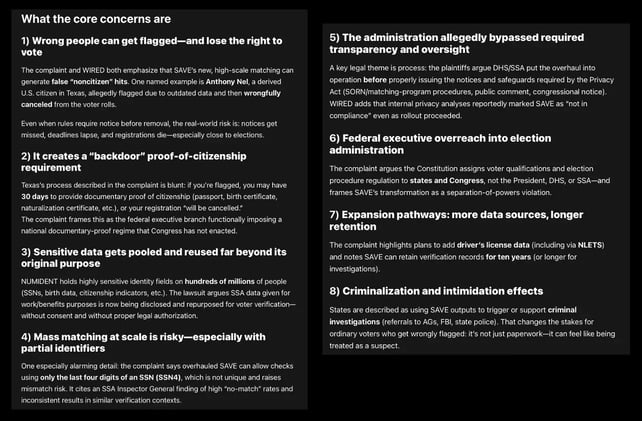
Allegation: Trump administration has repurposed and fused multiple government databases into a de facto “national citizenship data bank” and is pushing states to use it for mass “voter verification”.
When states match voter files against messy, repurposed federal data, U.S. citizens can get flagged as noncitizens and removed from rolls—or forced to jump through paperwork hoops to stay registered

PwC’s 29th Global CEO Survey: Executives are convinced AI is central to competitiveness, but most companies are still stuck in a “pilot-and-hope” phase where the economics don’t reliably show up.
Many companies are buying tools before they’ve built the operating conditions that make AI economically compounding (data access, workflow integration, governance, adoption, measurement).
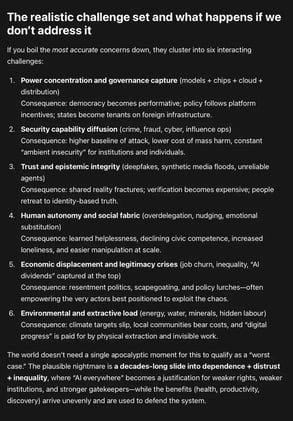
How major technologies typically scale: not by “becoming evil,” but by being deployed inside incentive systems that already are.
If the default content diet becomes synthetic, low-cost, engagement-optimized media, you can get a slow-motion erosion of judgment, attention, and civic competence.
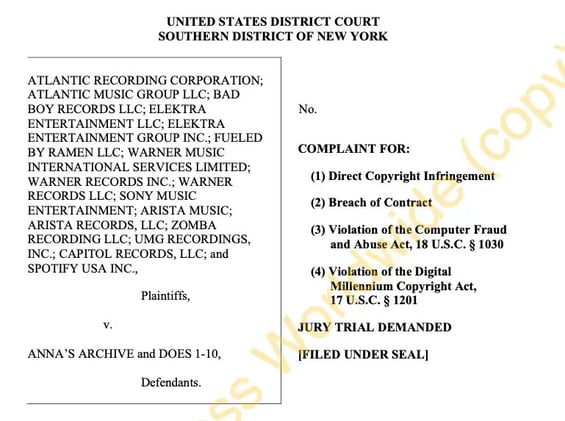
SDNY complaint (Atlantic/Warner/Sony/UMG entities + Spotify v. “Anna’s Archive” and Does 1–10) reads like a deliberate escalation: it’s not “just another piracy case,”
but a bid to treat mass scraping + DRM circumvention + imminent BitTorrent release as an existential threat to the streaming licensing stack.
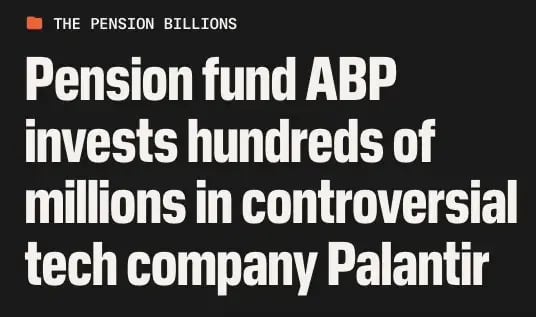
ABP’s Palantir position—whether you see it as prudent exposure to a booming defense-tech contractor or as morally compromised capital—crystallizes the same global dilemma:
retirement security is increasingly financed through technologies that make states more capable of surveillance, coercion, and kinetic harm.
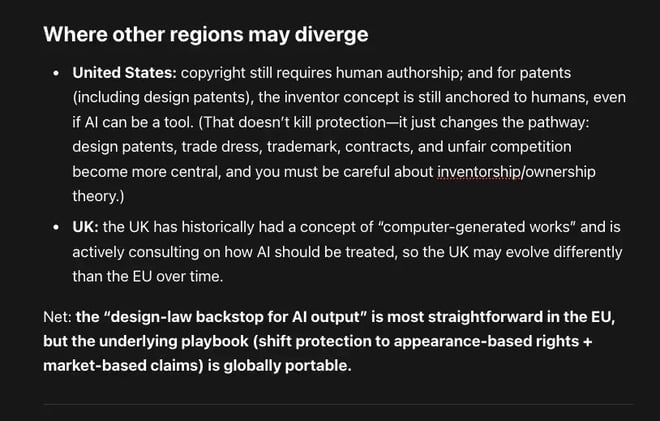
Where no human creative input is involved, copyright’s “originality” logic struggles, because originality in EU copyright doctrine is tied to human “free and creative choices” expressed in the work.
In practice, EU design registration can accommodate “AI output” as long as it meets design-law criteria. Even “low-creativity” processes can still yield protectable designs.
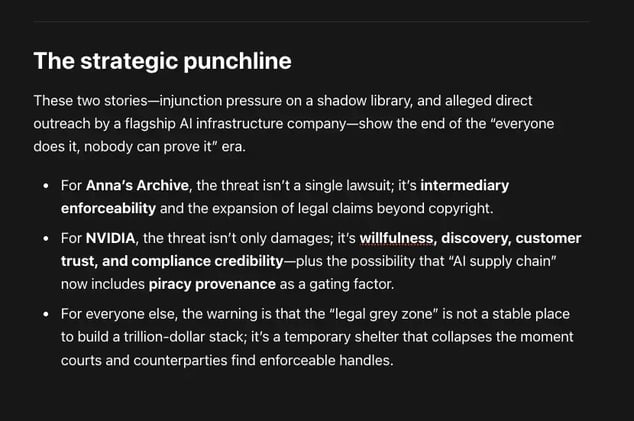
The plausible consequences for Anna’s Archive, NVIDIA, and any other AI developer that trained (directly or indirectly) on shadow libraries like LibGen, Sci-Hub, Z-Library, Books3, or The Pile.
When firms are credibly accused of using pirate corpora, licensing talks stop being “nice-to-have partnerships” and become risk buy-down.