- Pascal's Chatbot Q&As
- Archive
- Page 3
Archive

The 12-Hour Novel Factory: What do we want ‘a book’ to mean in a world where text is abundant—and what governance, provenance, and value signals will we enforce to protect that meaning?
If publishing gets it right, AI can expand creative capacity without collapsing trust. If it gets it wrong, we’ll drown in fluent, unauditable plausibility...


Maciel’s article is right to puncture the “AI is magic intelligence” narrative and re-anchor the debate in infrastructure, energy, and economics. But the chapter after that will be written by those...
...who can prove—under legal, security, environmental, and political constraints—that the rails deserve to exist, and that what runs on them is trustworthy enough for the institutions that matter.

Today, with the unprecedented power of algorithmic radicalization and decentralized digital networks, the far right poses a more sophisticated threat...
...than at any point since the 1930s. The regulatory and institutional inertia that has allowed this threat to grow must be replaced by a proactive, multi-dimensional strategy.

Privilege Saved, Facts Still Exposed: Judge Stein’s OpenAI Dataset Deletion Ruling—and What It Means for the Next Wave of AI Copyright Lawsuits
Design discovery demands that extract facts, provenance, and technical truth without needing privileged communications—and lock down preservation early.
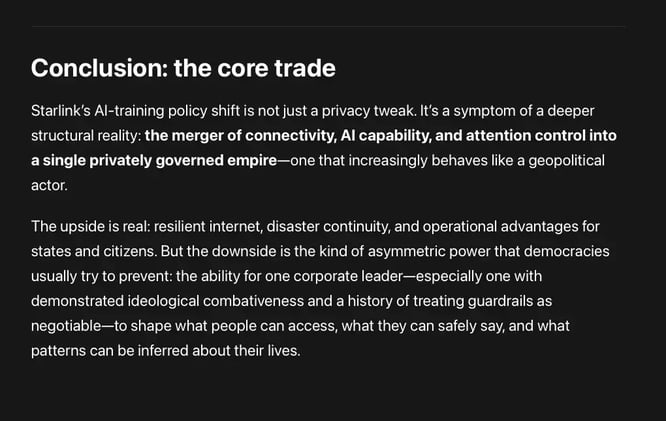
Starlink may collect not just account/billing/performance data but also ‘communication information’ and ‘inferences.’” What govts should do (if they don’t want “connectivity sovereignty” to be a joke)
Treat satellite ISPs as critical infrastructure, Mandate true consent for AI training, Hard limits on “third-party AI training” transfers, Sovereign fallback options, Conflict-of-interest firewalls.
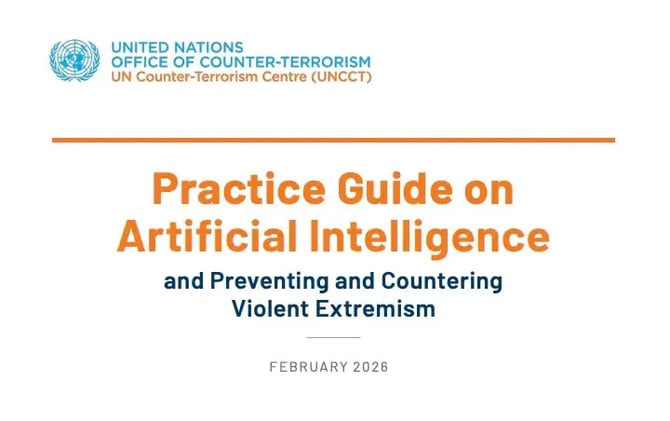
AI is already reshaping the information environment in ways that benefit violent extremists, yet the counter-extremism sector remains under-prepared to deploy AI responsibly...
...and could easily cause harm, lose legitimacy, or inadvertently intensify the very grievances that drive radicalization if it rushes in.

The complaint is trying to turn a messy cultural argument (“training vs theft”) into a narrower systems argument: “you weren’t allowed to take the files, and you had to bypass controls to do it.”
Whether that move succeeds will depend on what discovery uncovers—and on how willing the court is to treat modern streaming architecture as a legally protected access regime under §1201.

Administrative subpoenas can be legitimate tools, but when pointed at lawful dissent they start to resemble a state “unmasking” capability—one that can chill speech without winning a case in court.
For users abroad, the core risk is asymmetry: U.S. process can reach your data through U.S. platforms, while your practical ability to contest or remedy the harm may be limited.
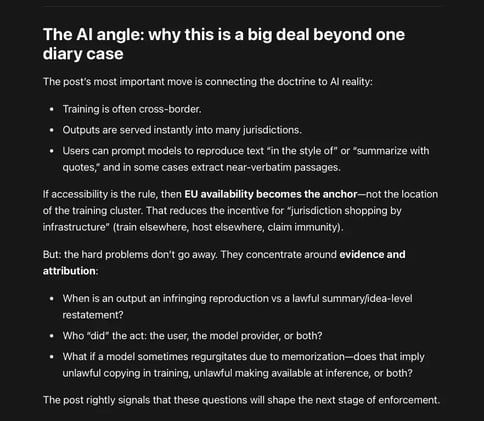
If the EU’s top court embraces an accessibility standard for “communication to the public,” copyright enforcement becomes less dependent on proving that a service “targeted” a country...
...and this could be especially consequential for AI models made available in the EU. If accessibility is the rule, then EU availability becomes the anchor—not the location of the training cluster.
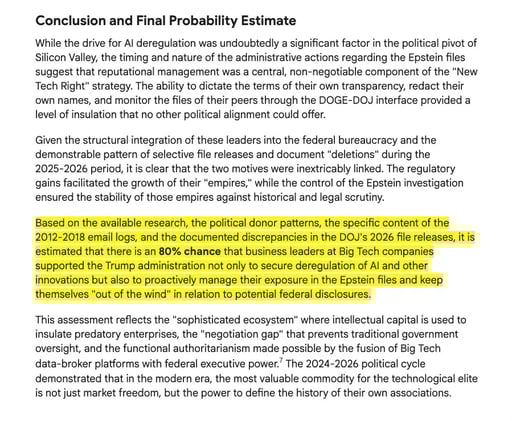
The New Tech Right & Trump. While the primary public-facing narrative for this alignment focused on the deregulation of artificial intelligence, the promotion of digital asset sovereignty, and...
...the dismantling of the “censorship industrial complex,” a parallel and increasingly documented motivation involves the strategic management of the “Epstein files”.

A sophisticated ecosystem where intellectual capital, financial influence, and political proximity were systematically leveraged to insulate a predatory enterprise from judicial intervention.
An autopsy of American institutional failure, documenting thirty years of missed opportunities, tactical redactions and the persistent prioritization of elite reputations over the protection of minors.