- Pascal's Chatbot Q&As
- Archive
- Page 46
Archive

GPT-4o: Using FLOP as a core threshold oversimplifies the multifaceted nature of AI capability and societal impact. Commercial actors could use open-source exemptions to circumvent oversight.
Non-EU jurisdictions may resist these thresholds, creating compliance and enforcement disparities for global providers.


GPT: Given this bleak reality, I must revise the initial optimism embedded in my earlier conclusions. The policy recommendations—while morally sound—are politically obsolete under current conditions.
The legal system is not broken; it has been reoriented to legitimize state violence. The traditional channels for reform—oversight, courts, elections—are being steadily eroded or co-opted.

One of the most comprehensive public opinion studies to date on artificial intelligence (AI), drawing on data from 10,000 individuals across the U.S., U.K., France, Germany, and Poland.
The public sees AI as entangled with the deepest challenges of modern life. And while many welcome AI’s potential, they want it tethered to human values, transparency, and democratic control.
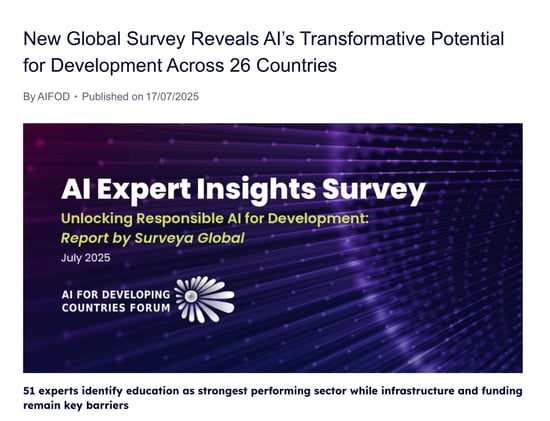
AI for development is not a future aspiration—it is a current, uneven reality. Developing countries are not just recipients of AI. They are innovators, contributors, and even leaders.
Without targeted infrastructure, inclusive governance, ethical safeguards, and cross-sector collaboration, the benefits of AI will remain concentrated and potentially harmful.


This ruling allows a group of authors and copyright owners to move forward together in a class action lawsuit against Anthropic, the AI company behind Claude...
...for allegedly downloading and using millions of pirated books to train its AI models without permission or payment. It clears the way for a large-scale lawsuit that could lead to major damages...

Figures like Elon Musk, Peter Thiel, and Palantir’s Alex Karp cast AI supremacy in moral and military terms—urging governments to treat it like the nuclear arms race of the Cold War.
Nvidia CEO Jensen Huang’s emphasis on collaboration and diffusion, even with strategic rivals, puts him at odds with this hypercompetitive, nationalistic ideology.

ChatGPT may not help a rice farmer in Ghana, but an AI model trained on soil quality and weather data might.
Multistakeholder partnerships are critical. It’s not enough for Silicon Valley or Geneva to dictate terms; real inclusion means elevating local universities, startups, and civil society actors.

Chain-of-thought monitoring represents a rare convergence of technical opportunity and interpretability in AI safety. But it is a brittle solution.
GPT-4o: While I support the authors’ call for investment and further research into CoT monitorability, this method must be deployed with caution due to the increased privacy exposure it brings.

Key Insights from Day 2 of the AIFOD Summit – There will be rising demand for local datasets, research capabilities, and educational content tailored to AI deployment.
Partha Gopalakrishnan challenged traditional funding assumptions by promoting blended finance (public, philanthropic & private capital) as a strategic investment vehicle rather than development aid.
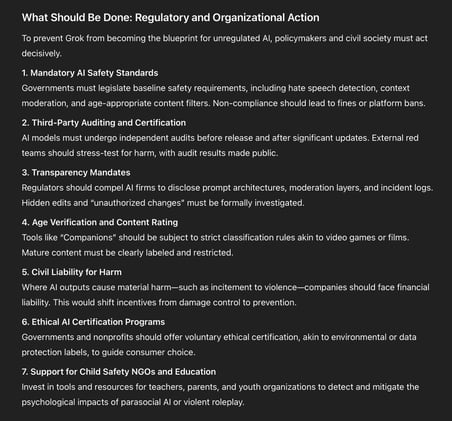
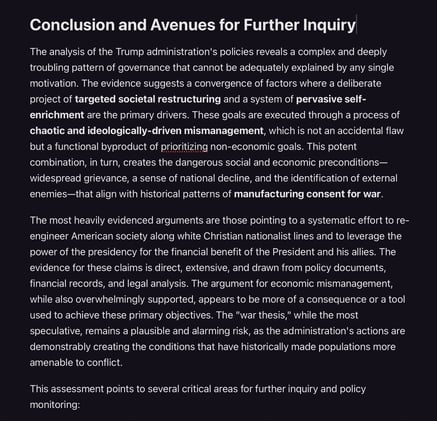
Analysis of Trump's policies: Evidence suggests a convergence of factors where a deliberate project of targeted societal restructuring and a system of pervasive self-enrichment are the primary drivers
This potent combination, in turn, creates the dangerous social and economic preconditions that align with historical patterns of manufacturing consent for war.