- Pascal's Chatbot Q&As
- Archive
- Page -111
Archive

Chicken Soup for the Soul & BMG v. Anthropic: a litigation strategy that treats generative AI as a copyright supply chain.
The core injury is not merely downstream outputs, but upstream mass copying—especially copying allegedly sourced from shadow libraries—followed by years of compounding commercial benefit.


Fortis Advisors v. Krafton: An AI chatbot was used as a strategic adviser for a “takeover” playbook. Not as a drafting helper, but as a source of structured pressure tactics,...
...messaging strategy, operational choke points, and litigation preparation—and the company then followed much of it in practice.

The World Intellectual Property Organisation (WIPO) launched the Artificial Intelligence Infrastructure Interchange (AIII)
A Technical Exchange Network has been assembled with over 90 experts from dozens of countries, spanning technology firms, AI developers, rightsholders, individual creators, academia, and civil society
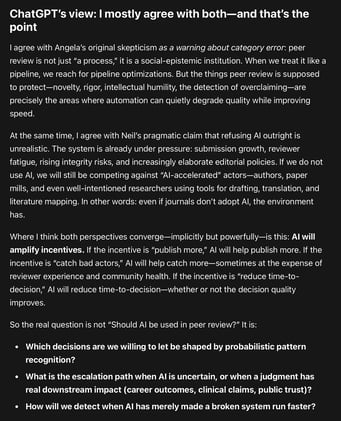
AI will force the industry to decide what peer review is for. If peer review is primarily a throughput mechanism for career signaling, AI will perfect the factory.
If peer review is a practice for testing claims & stewarding knowledge, AI can help—provided humans keep authority over judgment and incentives stop demanding that the system outrun its own legitimacy
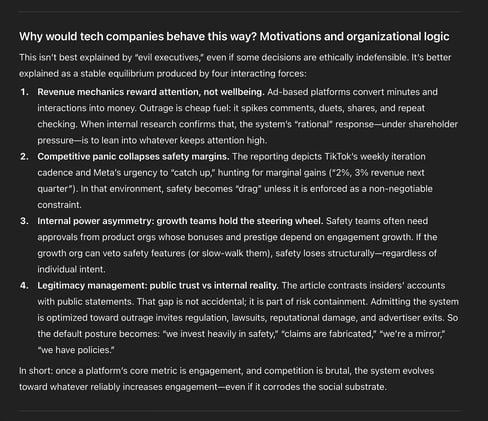
Safety and integrity becomes structurally subordinate when its success metrics (reduced harm, reduced exposure) collide with the company’s growth metrics (time spent, shares, comments, ad inventory).
In that environment, “harm” isn’t a bug; it becomes a predictable by-product of the optimization target.

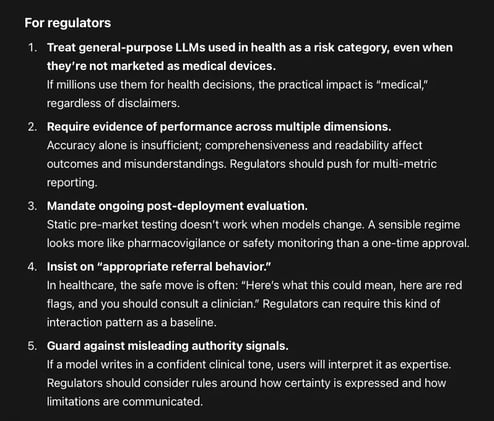
When eight popular large language models (LLMs) answer common parent questions about early maxillary expansion, how reliable are they—and how readable is what they say?
None of the models achieved “ideal patient education readability.” Even the “most readable” models were still too complex relative to common health communication guidance.
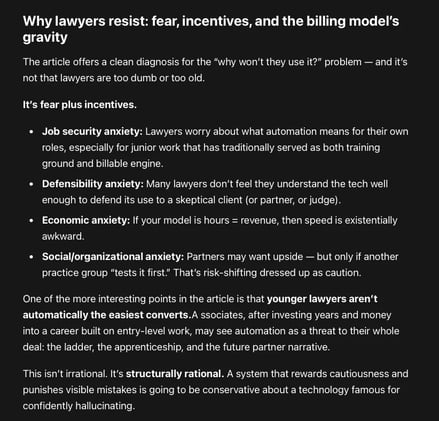

Who owns the pipeline that converts human cognition into machine capability—and what happens to societies that let that pipeline permeate everything?
AI only needs to eat the profitable, repeatable slices first. Once that happens, the remaining human work can become rarer, higher-pressure, and less funded—until it too gets “platformized.”
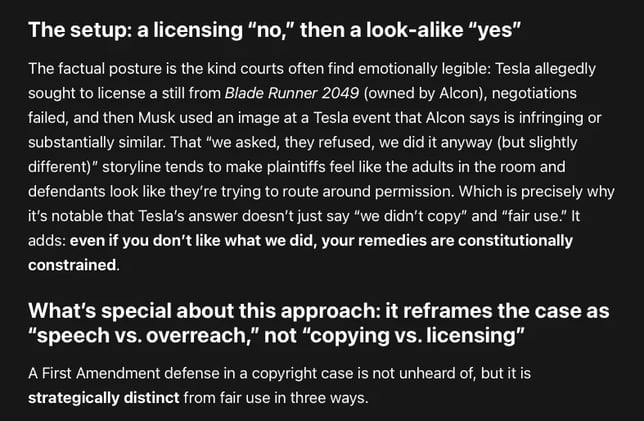
Elon Musk, Tesla, and Warner Bros. Discovery are teeing up the First Amendment as a front-of-house defense—explicitly placing it ahead of fair use.
That’s not just posturing. It’s a signal that the defendants want the court to see this case as a dispute where copyright doctrine is allegedly being stretched into a speech-controlling weapon.

DOGE: a governance experiment that treated law, institutions, and security controls as friction; treated generative AI as a compliance substitute; and treated speed as legitimacy.
DOGE demonstrated just how quickly “efficiency” can become the language that hides the transfer of authority, the degradation of rights, and the quiet privatization of the public sphere.