- Pascal's Chatbot Q&As
- Archive
- Page 38
Archive


Shein allegedly uses AI-powered surveillance tools to scour social media, competitor sites, and broader internet platforms for popular or emerging designs.
Once identified, these designs are either copied directly or subjected to minimal modifications before being transmitted to Shein’s manufacturing partners for rapid mass production.

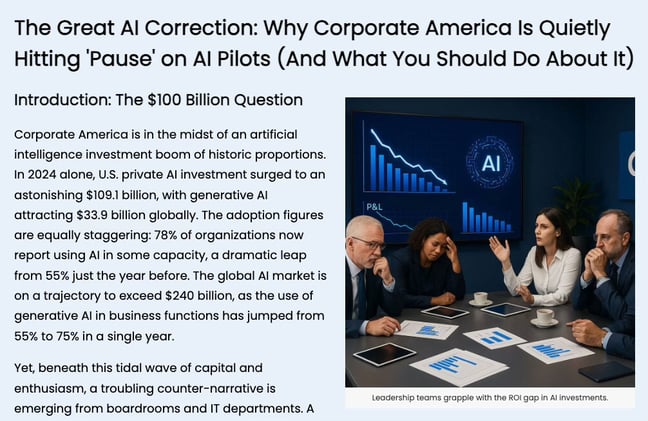
AI adoption cannot be left to hype-driven initiatives or unexamined optimism. Boards and executives must approach AI with the rigor of any other strategic transformation...
...grounding projects in clear business cases, aligning them with P&L goals, and investing in robust data governance. Successful AI integration requires cross-functional collaboration.

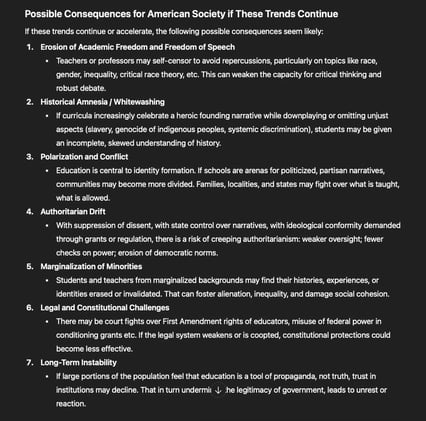
GPT-4o: I do think there is indeed a real effort underway by parts of the current U.S. political / educational / administrative establishment to promote patriotic, nationalist narratives in education
...to discipline and suppress dissenting voices among educators, and to shift public resources toward ideological agendas. Warning signs are real, dangerous trends seem to be accumulating.

Amended Suno complaint reflects strategic shift. By directly accusing the company of violating anti-circumvention laws, illegal scraping and generating outputs indistinguishable from copyrighted works
...the record labels are laying the groundwork for a watershed ruling shaping AI training, copyright enforcement, and the emerging frontier between machine-generated and human-created culture.

This fusion of governmental authority with quasi-religious language, where dissent is condemned as immoral and illegitimate, creates an environment of immense pressure on media & technology platforms.
This analysis seeks to determine whether the dynamics of self-censorship, commercial accommodation, and political appeasement seen in the 1930s are being replicated today.

AI adoption for large enterprises: Contrasting the successful, aligned strategies of pioneers like DBS Bank and Colgate-Palmolive with the cautionary tales of misalignment from IBM Watson and Zillow.
A strategic guide for enterprise leaders to move beyond fragmented experimentation and re-architect organizations into cohesive, AI-fueled engines capable of scalable and continuous value creation.

LLMs generalize based on token similarity, not semantic meaning. They’re trained to predict the next word—not to understand concepts like intention, empathy, or moral ambiguity.
GPT-4 could not distinguish between someone shaving an elder and shaming an elder by cutting off his beard. AI ratings were near-identical even when scenario meanings flipped 180°.

What was said—and how it was said—offers profound insights into the evolving dynamics of conservative thought...
...the strategic deployment of religious language, and the consequences of collapsing the wall between church and state. This framing risks turning political opponents into theological adversaries...

Ubiquity without depth. People embrace AI devices, yet use them for trivialities. The barriers—trust, perception, privacy, and reliability—are the same ones confronting AI innovation across sectors.
Adoption will not be driven by raw capability alone. It requires trustworthy, seamless, indispensable, and contextually intelligent AI that goes beyond novelty.

The LunaLock case illustrates just how easily AI can become a force multiplier for cybercrime. As AI continues to scale, the stakes grow higher.
The consequences of a data breach now also include the irreversible contamination of the intellectual commons and the potential weaponization of sensitive or proprietary content in future AI systems.